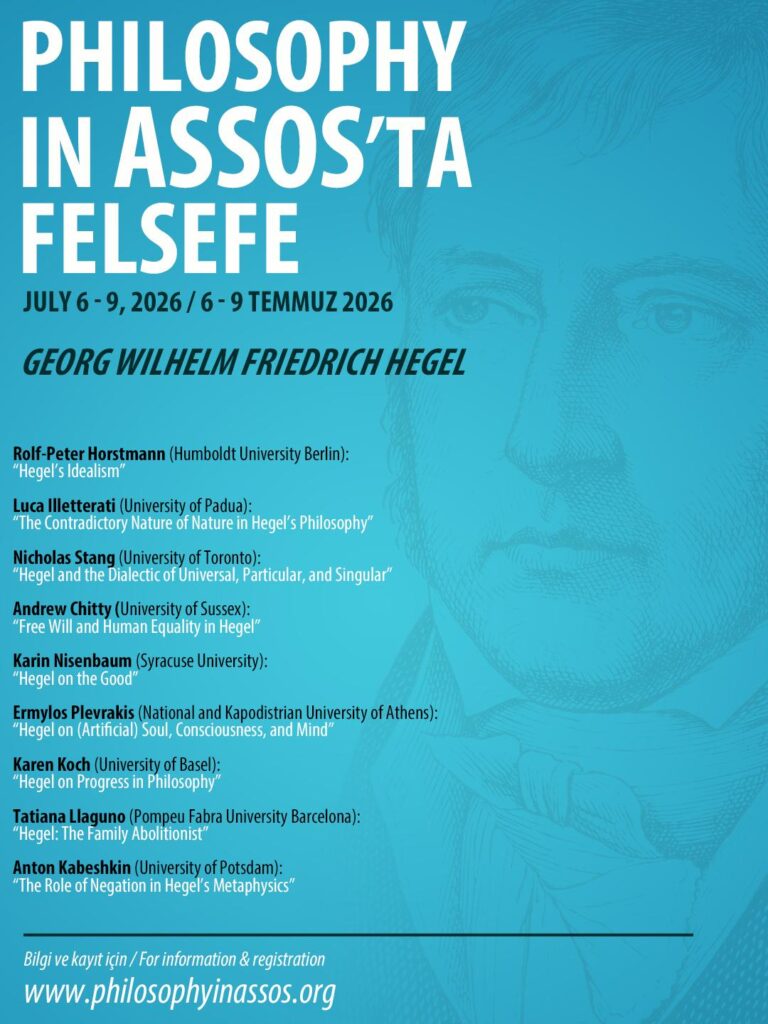
Hegel is the first to open up and examine the “wedge” that obstructs the epistemic subject, initiating a discussion on the mechanisms of the mind and the structural principles of consciousness. In a sense, philosophy begins anew with Hegel. What was this “Kantian wedge”? And why was the epistemic subject sidelined in the 19th century? One cannot discuss Hegel without addressing these points. By establishing a philosophy for mathematics and geometry—what Kant termed “synthetic a priori”—Hegel liberated these fields from a form of “clerical” (in both the religious and academic sense) arrogance and scholasticism; later, in the section concerning Cantor, we shall examine this very brand of clerical-mathematical scholasticism. Continue reading “How did Hegel explain to Cantor that 1 which is equal to ‘1!’ is not equivalent to 1 which is equal to ‘0!’? — AliPolaT & Engin Kurtay”
 The title is coined by the editor. The original text was published in Russian by Israel Shamir, referring and quoting the stunning article of Alexander Mezentsev.